# System components & architecture

## System architecture

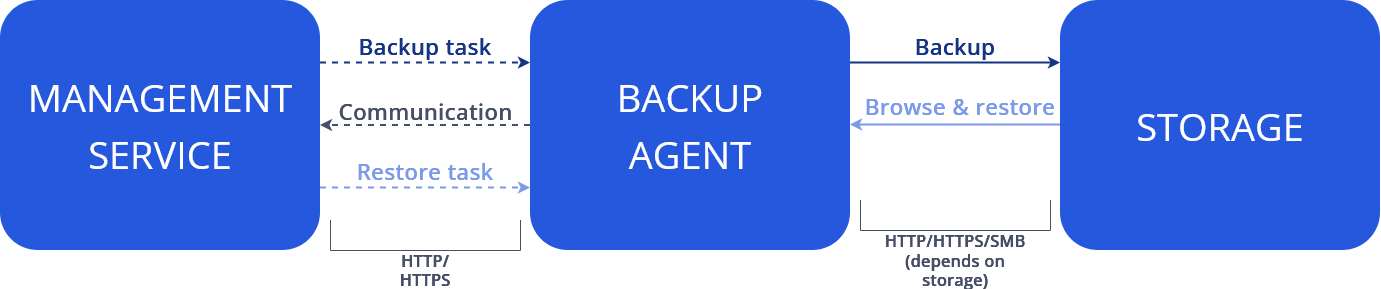
**GitProtect** system architecture is presented in the following diagram:

<figure><img src="https://696332517-files.gitbook.io/~/files/v0/b/gitbook-x-prod.appspot.com/o/spaces%2FtsE6XtJyUIEKVdSxPlS3%2Fuploads%2FZ8yxR9wiMRO6BcSGps5e%2Fimage.png?alt=media&#x26;token=266c657f-351c-43c6-af3b-472b065e3f06" alt=""><figcaption></figcaption></figure>

***

## Components

**GitProtect** product as a platform consists of three main components: management service, worker, and storage.

### <mark style="background-color:blue;">Management system</mark>

The main component required to run **GitProtect** backup system is called **GitProtect Management Service**. It allows you to comprehensively manage your backups and related resources using **Management Service** console with a user-friendly and easy to navigate UI. In on-premise deployment model it can be installed on almost any computer with **Windows** and **Linux** operating systems or **Docker** environment (even popular **NAS** devices). When it comes to SaaS deployment model, the management service runs on provider's cloud infrastructure.

**GitProtect Management Service** is divided into separate modules, each of them dedicated to a different aspect of backup management:

1. Dashboard
2. DevOps
3. Plans
4. Storages
5. Tasks
6. Logs
7. Settings

### <mark style="background-color:blue;">Worker</mark>

The second main component is called **GitProtect worker** and is an application installed on end devices with **Windows**, **Linux**, or **Mac** operating systems. **Worker** performs all operations requested by the **Management Service** including data processing (i.e., encryption, compression), connecting to data storage, sending data directly to the storage, and restoring data.

### <mark style="background-color:blue;">Storage</mark>

The last component on the list is storage—**GitProtect**, as a multi-storage system, allows you to store your backup data in the cloud (**GitProtect Cloud**, **AWS**, and any **S3** compatible public cloud), locally (NFS, SMB, iSCSI network shares, local disk resources), or in a hybrid environment.
